

Beyond the Warrior: Kesha Weeks on Caregiving, Advocacy, and the Power of Hope
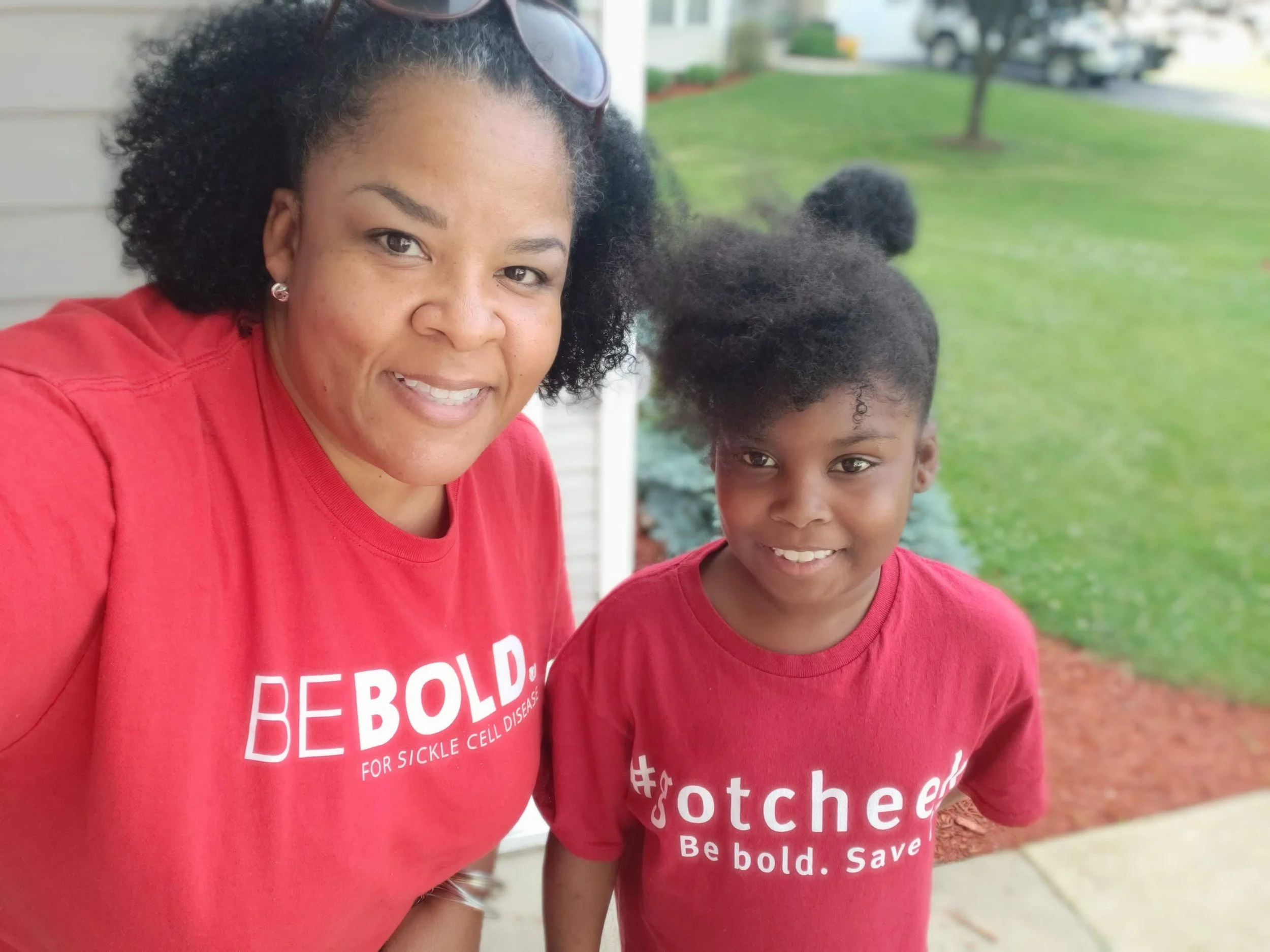
Kesha and Zahara Weeks are on their way to a Bowie Baysox game with the organization Delete Blood Cancer.
Kesha Weeks shares her journey as a mother, caregiver, and advocate navigating life alongside her daughter, Zahara, and sickle cell disease. Her story highlights the strength of caregivers, the power of advocacy, and the hope that comes from knowing no one has to face this journey alone.
When we hear about sickle cell from a personal perspective, we often center the warrior—the person living with the illness. But behind almost every warrior is a community of people who are nonetheless impacted by the disease as well. One core example is the caregiver. They learn how to help, adapt, advocate, and fight through the hardships of the disease alongside their warriors.
For Kesha Weeks, that role surprised her more than she expected.
Kesha is a Christian, school psychologist, wife, and mother who heavily values integrity, compassion, and passion. She and her husband always knew they wanted to build a family unit, so when they were expecting their first child, they were overjoyed. But unfortunately, alongside that joy, there was a heaviness she couldn’t ignore.
Kesha knew she was a carrier of the sickle cell trait.
She had known about her carrier status since she was a teenager, and as life unfolded, the topic of sickle cell kept coming up in small ways. She later became a seventh-grade math, science, and health teacher, where she taught her students about sickle cell and the importance of knowing if you are a carrier. But knowing about sickle cell and having a child with it are two very different things.
When Kesha and her husband, Dean, began planning their family, they knew there was a possibility of their child having the disease. To better understand that possibility, Kesha’s doctors tested Dean for the sickle cell trait, and the results came back positive.They understood the risks, but they also deeply wanted to become parents. So, when Kesha discovered during her pregnancy that her husband did carry the trait, the reality became much heavier.
Still, she stayed positive.
“If our child had sickle cell, we would face it head-on,” she said.
And that's exactly what they did.
Learning to Live With the Unknown
Motherhood and raising a child with sickle cell quickly taught Kesha that preparation could only take her so far.
At first, there was an overwhelming fear of the unknown—fear of missing something important. She remembers holding onto every word the doctor said, learning warning signs and symptoms, and trying to be the best parent possible. This soon turned into a fixation.
She would take her daughter's temperature every day, documenting it to create a baseline. She constantly monitored and prepared because she wanted to know what was normal. The only issue? This was her first child. There was no other newborn to compare this with.
Early parenthood included frequent emergency room visits, medication twice a day, doctor visits, and even more monitoring than for a normal baby. Kesha remembers a friend being upset that she had to take her child to the hospital. She was astonished because she had experienced weeks where her own daughter was in the emergency room three to four times.
Sickle cell taught her something she didn’t learn from teaching: You can’t control every day. Plans get canceled. Hospital stays happen and get extended. Things fluctuate in ways you have no control over. Sickle cell is different for everyone. She says, “Every story is very unique.”
And for Kesha, learning how to be a caregiver meant learning how to navigate those unknowns while continuously showing up for her family.
“I Thought I Knew Sickle Cell”
Eventually, Kesha began to realize that her experience could serve a purpose beyond her own household.
She had been a teacher. She had taught about sickle cell. She thought she understood it.
Then she became a mother.
“When I was a teacher, I thought I knew sickle cell,” she reflected. “But when I think about every way sickle cell impacts Zahara, I was ignorant. If I was ignorant as a teacher, there must be so many more people like me.”
That realization became a turning point.
She started sharing their experiences as a family on social media, talking about sickle cell and what her daily life transformed into. People began responding, thanking her for sharing. They told her that her advocacy had helped them. Those responses pushed her to go further.
Her advocacy grew more when she learned about the only available potential cure at the time: a bone marrow transplant. She then recognized a big gap: patients of color may face a lower chance of finding a matching donor because of the underrepresentation in donor registries. And suddenly, advocacy wasn’t just about her family; it was about families all over.
Kesha soon realized that if her voice could help someone else find a match, or help someone understand the importance of joining a donor registry, then her story would be much larger than her—larger than her family.
One moment in particular stayed with her: when someone she encouraged to join the registry became a match for a child. Knowing that her efforts helped contribute to another child’s opportunity for a cure, “It was one of the best feelings I have ever experienced,” she stated.
Finding Community
Advocacy not only transformed how Kesha interacted with the world, but it also influenced how her family approached various situations. As her daughter grew, Kesha taught her that advocating for herself was not just beneficial, but essential for her survival. Over the years, under Kesha's guidance and mentorship, her daughter expanded her advocacy efforts from solely representing herself to teaching others. She explained her illness to her classmates, informed her teachers about her 504 plan, and went even further by speaking on panels.
Eventually, hearing her daughter advocate for herself helped Kesha understand sickle cell disease from Zahara’s perspective. As a baby and even as a child, Zahara struggled to clearly express what she was feeling. Now that Zahara is a young adult, Kesha has gained a clearer understanding of what her daughter's life is like. Kesha's husband also offers a unique perspective, and together, their family continues to learn from one another.
Their community plays an important role as well. Through prayers, encouragement on social media, connections with other warriors, and access to resources, Kesha came to a crucial realization: the weight she feels as the mother of a chronically ill child is still present. She often felt unsupported throughout many periods of her parenting journey and has decided that caregivers also need to be acknowledged and seen.
A parent can love their child with all their heart and still feel exhausted. They can be strong and have rough days. They can be prepared and still face the unexpected. That is why stories matter. They connect, create understanding, or even simply remind someone that they are not alone.
The Meaning of “Warrior”
When Kesha hears the word warrior, she instantly thinks of her daughter. For her, a warrior's purpose is to be prepared to fight. And even though her daughter is the one with the disease, as a caregiver, Kesha’s a warrior too.
And as warriors do, in this season, she feels her role is preparation. As Zahara grows into adulthood, she needs to ensure she is equipped with the amount of independence a black, female, sickle cell warrior needs in this world. She needs to be responsible for her health, and if she isn't, the effects could be detrimental.
She feels this second wave of parenting brings forth preparation rather than solely protection.
Looking Ahead (More Than Surviving)
“What do you hope someone living this journey right now feels or learns when they read your story?”
When asked this question, Kesha becomes emotional. She hopes for resilience. She wants her story to bring others hope, whether it be a fellow caregiver, patient, or even someone just learning that the disease exists.
But she doesn't want to pretend the journey is easy. She’s not going to say that all you need is a positive attitude and that every day is a breeze.
There will be hard days. There will be hard weeks, or even months, when families feel tired. The journey is emotional and physical for both the patient and caregiver alike.
Her message is never that people shouldn’t struggle. It’s that they are not alone. She says, “You have everything you need equipped inside you.”
She doesn't want sickle cell to only be told as a gloomy fate. She wants families to recognize that they are co-pilots in their own story, that they can be intentional about thriving, not simply surviving.
And perhaps most importantly, she wants people to recognize the value in their own stories.
Seeds of Advocacy
I end every interview by asking, “Is there anything your heart wants to say that we haven’t asked yet?” I think this is the most crucial part, in fact. We’ve heard your story, heard what I want to hear from you, but what do you want the world to know?
And upon asking this question, Kesha became emotional.
“The fact that I'm feeling emotional shows that there is a need for your project,” she says.
She reflects on how proud she is of her daughter, and how meaningful it is to see the years of seeds of advocacy she planted in her, growing and blossoming into something of their own.
She loves seeing advocacy become a value for Zahara.
She is excited to see what her daughter will do with her voice, and believes it’s just a matter of time until she sees what amazing impact she will have on the sickle cell community and beyond. She hopes that her message reaches further than just their family unit.
Zahara sees sickle cell as a part of who she is, not something there solely to hold her back. She believes that this view of life is what makes her uniquely herself. Kesha hopes others can see the light she sees in Zahara as well. Because good can come from a difficult story.
There can be advocacy.
There can be a community.
There can be hope.
There can be connection.
And sometimes, one person’s decision to share their story becomes the reason someone else realizes that they don’t have to face this alone.
That is the heart of SCW V.O.I.C.E.S.
Not simply telling stories about warriors, but creating a collaborative space where warriors, families, caregivers, and advocates can be seen, heard, and reminded of the strength they have inside them.
The story doesn’t end with sickle cell. It's only one part.
